
Nitcha Khampradit
Create . Teach . Inspire

Artist BIO:
Cviisual Art Studio is proud to feature the landscape oil paintings of Nitcha Khampradit.
A Thai-born artist with a deep-seated reverence for traditional culture, Nitcha’s studio practice is an extension of her spiritual life. Following the Buddhist path with a devotion to Hindu traditions, her creative day begins with ritual offerings—a practice of mindfulness that flows directly into her vibrant, tactile canvases.
While Nitcha occasionally explores religious iconography, her primary fascination lies in the rugged soul of the Australian bush.
Her work is a technical study of ‘skin and bone,’ focusing specifically on the intricate textures of tree bark. Using palette knives and oil paint exclusively, she builds thick, impasto layers to recreate the sculptural ridges and weathered surfaces of native timber. This heavy texture allows the light to play across the canvas, mimicking the way sunlight filters through a forest canopy.
Though Nitcha began her painting journey ten years ago, her work is underpinned by a lifelong mastery of draftsmanship. Self-taught but technically rigorous, she possesses the rare ability to draw complex natural forms with remarkable speed and anatomical accuracy.
This foundation allows her to move beyond mere representation, using the palette knife to carve out landscapes that feel as ancient and enduring as the traditions she carries with her.
Artist Statement
My work is inspired by the Australian landscape and by the quiet moments of observation that often go unnoticed in everyday life. Through drawing, watercolour, acrylic and oil painting, I explore not only what a place or subject looks like, but how it feels to experience it.
I am drawn to changing qualities of light, atmosphere, texture and the passage of time. Whether working from direct observation, reference material or memory, my representational work often begins with a recognisable subject but is shaped by my own response to place, mood and experience.
Alongside this representational practice, abstraction gives me the freedom to explore ideas less literally. These works may develop through intuitive mark-making, layers of colour and texture, fragments of text, repeated forms, erasure and the physical process of applying and removing paint. Rather than beginning with a predetermined image, I often allow the work to evolve through experimentation, responding to what happens on the surface as the painting develops.
Across both approaches, I am interested in the relationship between observation and interpretation — between what we see and what we remember, feel or imagine. My aim is not simply to describe a subject, but to create artworks that reward looking: works that invite viewers to slow down, discover their own associations and form a personal connection with what they see.
Observation
Every artwork begins with looking — whether at the world around me or at what is emerging on the surface of the work itself. Drawing and painting are not simply technical skills, but ways of seeing, questioning and responding. Careful observation allows me to explore light, atmosphere, form and the quieter details that can easily go unnoticed.
Craftsmanship
My practice is grounded in traditional art-making skills developed through formal study and decades of continued practice. From drawing and composition to colour, materials and technique, craftsmanship provides the foundation from which I work. Whether a painting is representational or abstract, I value thoughtful decisions, quality materials and an understanding of the processes behind the finished work.
Exploration
Alongside technical skill, I value experimentation and discovery. Abstraction allows me to work more intuitively through colour, texture, mark-making, layers, fragments of text and the physical process of applying, altering and removing paint. I don’t always need to know where a work will finish when I begin; sometimes the most interesting direction emerges through the process of making it.
What Drives My Practice
My artistic journey began with a fascination for drawing and a desire to understand how images communicate meaning. Formal studies in Fine Arts at TAFE NSW and the University of New South Wales provided a strong technical foundation, but some of the most important lessons have come through decades of continued observation, experimentation and making.
What continues to drive my practice is curiosity — about the world I observe, the materials I work with, and the possibilities that emerge through the creative process. Sometimes this leads to a carefully observed landscape or representational work; at other times it develops through abstraction, intuitive mark-making, colour, texture, fragments of text and layered surfaces.
I value technical knowledge, but I also value the freedom to question it, experiment and allow unexpected discoveries to influence the direction of a work. For me, art is an ongoing conversation between observation, craftsmanship and exploration.
Closing Statement
I believe that art is both a craft and a lifelong journey of discovery.
My goal is not simply to reproduce what I see, but to explore what can be observed, remembered, imagined and discovered through the process of making. Whether working representationally or through abstraction, I aim to create artworks that encourage curiosity, reflection and a personal response from the viewer.
For me, the value of art lies not only in the finished work, but in the process of looking, questioning, experimenting and discovering something that was not there before.
Academic Transcript
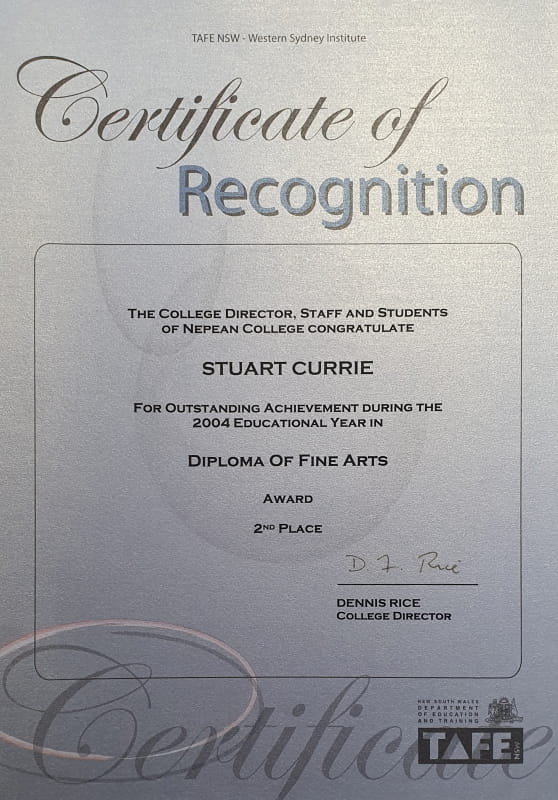
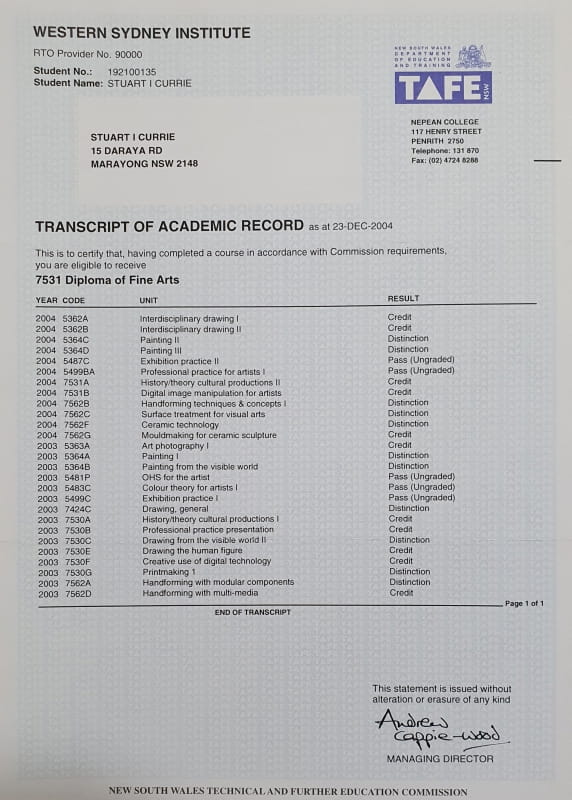
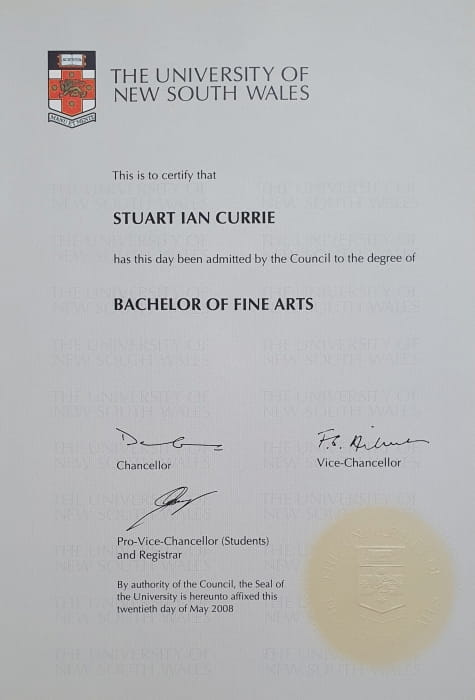
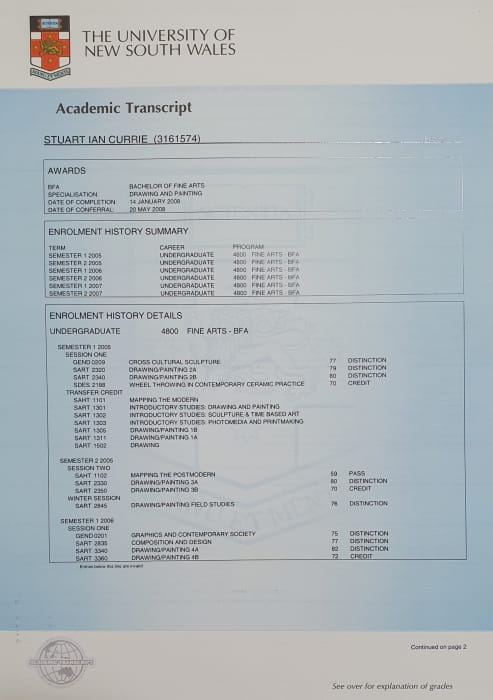
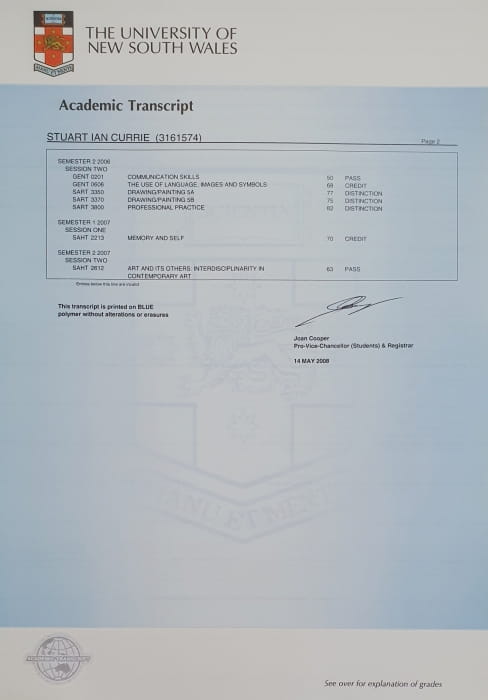
- stuart ian currie
Great artists have always understood that painting is both discipline and emotion.
This concept is something I continue to explore in my own studio practice.